
A suitable inverter model is only one part of a successful procurement decision. For Singapore buyers, choosing a Huawei solar inverter supplier also means assessing the system design, technical documentation, compatibility with connected equipment, and project support.
Start with the project’s operating requirements, then use current manufacturer documents to assess the specific inverter. Supplier information answers a different set of questions: what equipment the business distributes and what project support it provides. This guide explains how to assess system fit, review technical documents, and compare supply support.
SM Solar is a wholesale solar hardware distributor. Its portfolio includes hybrid inverters, batteries, charge controllers, and circuit protection, and its capabilities include system integration, installation, and after-sales maintenance for end users. The following sections offer practical criteria for evaluating inverter fit, documentation, and project support before making a procurement decision.
Key Takeaways
- Define the project’s operating requirements before comparing inverter types. Grid-tied, hybrid, and off-grid systems serve different purposes.
- Evaluate a Huawei solar inverter supplier using evidence: review technical documents, system compatibility, and the scope of project support.
- Compare storage needs, operating context, and documentation to identify system-fit questions early.
- Verify current Singapore grid-connection and compliance requirements against official guidance before finalising project specifications.
- SM Solar’s wholesale portfolio includes hybrid inverters and related solar hardware, with system integration, installation, and after-sales maintenance capabilities.
Huawei Solar Inverter Supplier Selection Starts with Project Fit
A solar inverter supplier supports equipment procurement and helps coordinate product requirements with the wider project. The manufacturer, by contrast, provides the inverter and its official product documentation. Keep these roles distinct when assessing product performance and supply support.
An inverter’s suitability depends on its documented functions and limits in relation to the system design. A supplier’s fit depends on its distribution and project-support capabilities. Huawei’s wider corporate background can be reviewed separately from inverter performance. The Huawei corporate background provides company history, not model-level technical evidence.
What information should buyers define before sourcing?
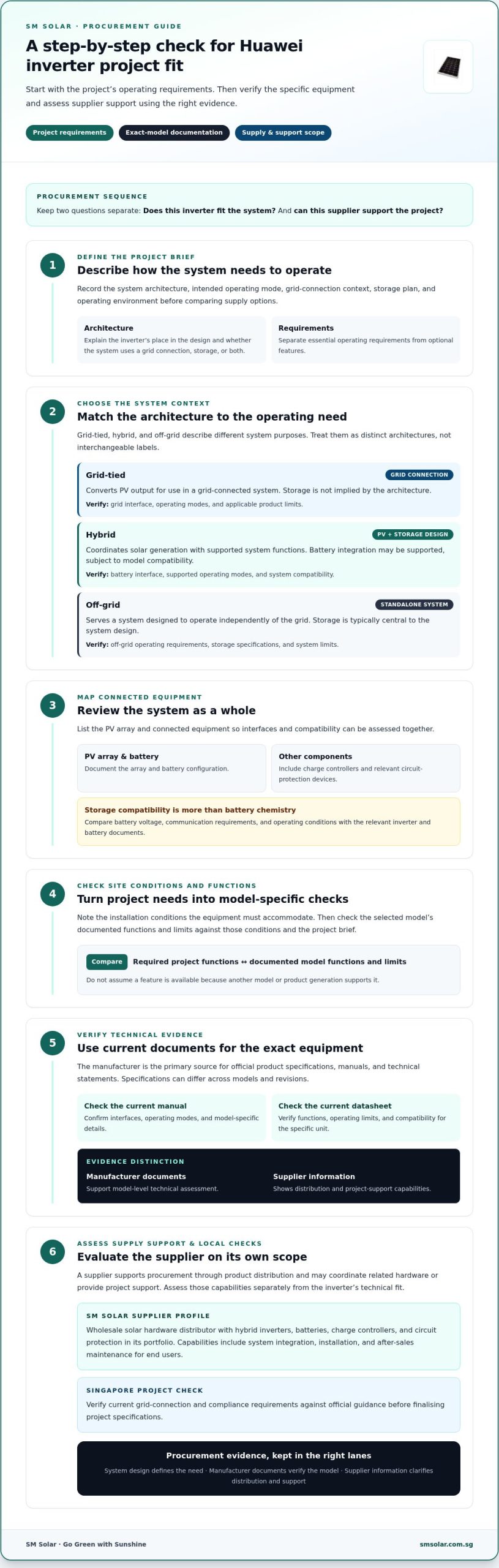
Prepare a project brief before comparing supply options. Record the system architecture, intended operating mode, grid-connection context, storage plan, and operating environment. List the PV array and connected equipment, including batteries, charge controllers, and circuit protection. A clear brief gives procurement discussions a practical system context rather than a brand name alone.
- System architecture: Explain how the inverter fits into the design and whether the system is intended to operate with a grid connection, storage, or both.
- Connected equipment: Document the PV array, battery configuration, and relevant protection devices so their interfaces can be assessed together.
- Operating environment: Note the installation conditions the equipment must accommodate, then compare them with manufacturer documentation.
- Required functions: Separate essential operating requirements from optional features to keep comparisons focused on project needs.
Use current manufacturer documents to verify model-specific functions, interfaces, operating limits, and compatibility. Specifications can differ across models and revisions, so check the documents for the exact equipment being considered.
How does a supplier differ from the inverter manufacturer?
The manufacturer is the primary source for official product specifications, manuals, and technical statements. A supplier supports procurement through product distribution and may also coordinate related hardware or provide project support. Assess each role using the information relevant to it.
SM Solar is a wholesale solar hardware distributor with hybrid inverters, batteries, charge controllers, and circuit protection in its portfolio. Its capabilities include system integration, installation, and after-sales maintenance for end users. These services support broader project coordination, while the inverter’s manufacturer documentation remains the reference for model-specific technical details.
When assessing a Huawei solar inverter supplier, compare two kinds of evidence: manufacturer documents for the inverter and supplier information about distribution and support. This helps distinguish technical fit from procurement capability.
Huawei Inverter Types and System Integration Requirements
Inverter architecture determines how solar generation, the grid, and storage interact. Grid-tied, hybrid, and off-grid systems address different operating requirements, so the terms are not interchangeable. The Energy Market Authority’s guide explains the inverter function in a PV system. Use that system-level context alongside the project design and current manufacturer documents.
| System type | Function | Storage relationship | Operating context | Documentation to verify |
|---|---|---|---|---|
| Grid-tied | Converts PV output for use in a grid-connected system. | Storage isn’t implied by the architecture. | Designed around a grid connection. | Grid interface, operating modes, and applicable product limits. |
| Hybrid | Coordinates solar generation with supported system functions. | May support battery integration, subject to model compatibility. | For projects designed around both PV and storage. | Battery interface, supported operating modes, and system compatibility. |
| Off-grid | Serves a system designed to operate independently of the grid. | Storage is typically central to the system design. | For standalone power requirements. | Off-grid operating requirements, storage specifications, and system limits. |
Grid-tied and hybrid inverter requirements
A grid-tied design is built around connection to the electricity network. A hybrid design considers storage alongside solar generation, but its operating modes and interfaces depend on the selected equipment. Don’t assume a function is available because another model or product generation supports it. Check the current manual and datasheet for the specific unit.
For standalone architecture, see this off-grid hybrid inverter specification guide. It provides further detail on evaluating off-grid system requirements.
Battery and component compatibility checks
Storage coordination involves more than matching a battery’s chemistry to an inverter category. Compare battery voltage, communication requirements, and operating conditions with the relevant inverter and battery documents. The LiFePO4 battery supplier guide covers considerations for storage coordination.
Include charge controllers and solar circuit protection in the system review. These are separate components, each with its own design and compatibility requirements. Check how they fit the complete electrical design, including connections and protection requirements. A Huawei solar inverter supplier can support procurement and component coordination, while manufacturer documents provide the reference for model-specific functions and limits.
SM Solar distributes hybrid inverters and related solar hardware, including batteries, charge controllers, and circuit protection, and provides system integration. Explore solar hardware and integration support when planning a coordinated system supply.
How to Evaluate a Huawei Solar Inverter Supplier
Use a clear sequence: define project requirements, review product documents, assess system fit, and then evaluate the supplier’s support scope. This keeps procurement decisions grounded in evidence rather than the brand name or broad claims such as “complete solution.” Evaluate a Huawei solar inverter supplier on its documented supply and project-support role, and check product functions and limits against current manufacturer information.
- Define requirements: Record system architecture, operating mode, PV array, storage plan, and connected equipment.
- Review documents: Match current documents to the specific inverter and project design.
- Assess system fit: Check interfaces, operating requirements, and relevant limits across the complete system.
- Check support scope: Identify the distribution, component coordination, integration, and after-sales capabilities described by the supplier.
Which technical documents support a sound decision?
Use product-specific documents rather than a general product-family summary. Record each document’s model reference, revision or publication date, and source. For Singapore projects, compare relevant compliance documents with current project requirements and official guidance. A document for another model or market does not establish suitability for the proposed project.
| Document | Procurement check |
|---|---|
| Datasheet | Confirm the model identifier, stated functions, interfaces, and operating limits against the design. |
| Installation manual | Review installation conditions, wiring interfaces, and manufacturer instructions for the proposed configuration. |
| Compliance documents | Check product-specific documents against the project and current Singapore requirements. |
| Warranty terms | Review the applicable terms, coverage, exclusions, and stated process. Distinguish manufacturer terms from supplier support. |
Resolve document discrepancies before procurement. Keep a record of the versions used for design review so the selected equipment can be traced to the supporting evidence.
Which supplier capabilities matter beyond the product?
Assess distribution scope, component coordination, integration capability, and after-sales support as separate criteria. Look for a clear description of the supplier’s role. Then assess those capabilities alongside the manufacturer’s information about the specific inverter.
SM Solar is a wholesale distributor of solar hardware, including hybrid inverters, batteries, charge controllers, and circuit protection. Its project-support capabilities include system integration, installation, and after-sales maintenance for end users. These services can support procurement involving related equipment and project coordination.
Compare the documents and support scope against the project brief, then retain the evidence used for the decision. This gives you a practical basis for assessing supplier fit.
Singapore Project Checks for Huawei Inverter Procurement
For a Singapore project, treat grid connection, design constraints, and applicable compliance as procurement checks, not assumptions. Requirements can depend on the project and may change. Verify current guidance from relevant Singapore authorities and consult product-specific manufacturer documents before finalising an inverter selection. A Huawei solar inverter supplier can support equipment sourcing, while procurement decisions should align with the project design and applicable official requirements.
What should project documentation cover?
Review the design package as a coordinated set. The equipment schedule, system diagrams, and product documents should describe the same inverter configuration and connected hardware. Identify project factors that may affect selection or configuration, including the intended operating mode, PV array, storage plan, and grid-connection context.
- Equipment schedule: Record the selected inverter and connected PV, battery, and protection equipment using product-specific identifiers.
- System diagrams: Show how the equipment is arranged and how relevant interfaces are intended to connect.
- Technical documents: Match datasheets and manuals to the selected equipment and configuration.
- Local requirements: Verify applicable grid-connection and compliance requirements against current authoritative Singapore sources.
Resolve mismatches before procurement. For example, if a drawing shows battery storage but the equipment schedule or inverter documents describe a different configuration, address the discrepancy before treating the design as final.
How should component coordination be managed?
Map the inverter’s documented interfaces against the selected PV array, battery, and protection equipment. Check product documents for relevant operating and connection requirements. Record compatibility only when the documents support the proposed combination, rather than inferring it from a shared brand category or a general supplier statement.
Protection is part of the system design. Review the selection and placement of circuit protection alongside the inverter and connected equipment. The solar circuit protection device guide provides further context on PV system protection considerations.
Assign responsibility for each project activity. The procurement record should identify who handles equipment supply, system integration, installation, and maintenance, where these roles apply. Clear ownership helps keep product documents, drawings, and installation requirements aligned as the project moves forward.
SM Solar distributes solar hardware wholesale and provides system integration, installation, and after-sales maintenance capabilities. Its portfolio includes hybrid inverters, batteries, charge controllers, and circuit protection. Explore solar hardware and project support for coordinated procurement and system planning.
SM Solar’s Wholesale Role in Solar Inverter Project Supply
Inverter procurement is one part of a solar project’s wider hardware and coordination requirements. SM Solar is a wholesale distributor of solar hardware, including hybrid inverters and related equipment. Established in 2008, the company converted to a private limited company in 2016. It supports project supply across relevant equipment categories.
Where SM Solar fits in the procurement workflow
Inverter sourcing can sit alongside requirements for batteries, solar charge controllers, and solar circuit protection. Coordinating these categories gives the project team a broader view of equipment needs. Technical compatibility still depends on the product documents and system design.
SM Solar’s capabilities include system integration, installation, and after-sales maintenance for end users. These services extend project support beyond wholesale distribution. For Huawei inverter procurement, assess this supply and support scope separately from the manufacturer’s product specifications. Buyers comparing a Huawei solar inverter supplier can use these criteria to review responsibilities across the project.
What to prepare for a project supply discussion
A concise project brief organises procurement around the actual design. Include the system architecture and intended application, then list the required equipment categories and how they relate to the planned configuration. For a project with storage, for example, document the battery plan alongside the inverter and associated protection requirements.
- System overview: Summarise the architecture, operating mode, and intended application.
- Equipment schedule: List the inverter, PV equipment, battery, charge controller, and protection devices relevant to the design.
- Technical references: Include current product datasheets, manuals, and other applicable manufacturer documents.
- Project requirements: Record design constraints and applicable Singapore requirements verified against current authoritative sources.
Use these materials to separate product questions from supply and integration needs. Manufacturer documents are the reference for model-specific functions and limits. Supplier capabilities relate to distribution, equipment coordination, and project support. For broader procurement context, see the solar equipment supplier guide.
For project-focused procurement, review SM Solar’s solar hardware supply capabilities across hybrid inverters and related equipment.
Make the Next Procurement Step With Clear Project Criteria
A sound inverter decision starts with the system design, not the brand name alone. Match the intended operating mode, PV array, storage plan, and protection equipment to current manufacturer documents. Then evaluate the supplier’s distribution scope, component coordination, and project support.
For Singapore projects, verify grid-connection and compliance requirements using current authoritative guidance. Keep equipment schedules, system drawings, and product documents aligned before procurement. These steps help you assess a Huawei solar inverter supplier using evidence and avoid assumptions about model compatibility or supplier capabilities.
SM Solar is a wholesale distributor of solar hardware, including hybrid inverters, and provides system integration, installation, and after-sales maintenance capabilities. Established in 2008, the company converted to a private limited company in 2016. Its hardware portfolio supports project planning across related equipment categories.
Review SM Solar’s solar hardware supply capabilities as you prepare your project requirements. Start with a structured procurement brief to organise equipment needs and system planning.
Frequently Asked Questions
How do I choose a Huawei solar inverter supplier?
Choose a Huawei solar inverter supplier by comparing project fit, current product documents, and defined supply support. Start with the system architecture, grid connection, storage plan, PV array, and connected equipment. Review the inverter’s current datasheet and manual, then assess distribution, component coordination, integration, and after-sales support. Keep manufacturer specifications distinct from supplier capabilities, and assess model-specific details using current documents.
Can a Huawei solar inverter work with a battery?
A Huawei solar inverter can work with a battery when the specific inverter and battery configuration support that arrangement. Check current manufacturer documents for supported battery types, voltage requirements, communication interfaces, operating modes, and system limitations. Don’t assume compatibility based on the brand name or battery chemistry alone. Compare documents for both products with the project’s overall system design.
What is the difference between a hybrid and a grid-tied solar inverter?
A grid-tied inverter is designed for a solar system connected to the electricity grid. A hybrid inverter is intended for a system that coordinates solar generation with storage functions, subject to its supported configuration. The categories are not interchangeable. A grid-tied design does not imply battery support, while hybrid capability depends on the specific model and connected equipment. Check manufacturer documents for operating modes and interfaces before selection.
What documents should I review before buying a Huawei solar inverter?
Review the current product datasheet, installation manual, and applicable manufacturer documents for the exact inverter model. Check product-specific compliance documents against the project’s requirements and current Singapore guidance. Review warranty terms separately, including the stated coverage and process. Record model identifiers and document versions, then compare them with the equipment schedule and system drawings. This helps identify mismatches before procurement and keeps the decision traceable to current evidence.
Does a solar inverter supplier provide system integration and after-sales support?
Some suppliers provide support beyond equipment distribution, and the scope varies. SM Solar is a wholesale solar hardware distributor with capabilities in system integration, installation, and after-sales maintenance for end users. When evaluating project support, distinguish these services from manufacturer specifications, product warranty terms, and model-specific technical support.
How do I check whether an inverter is suitable for my solar project?
Compare the inverter’s current datasheet and installation manual with the complete project design. Check the system architecture, intended operating mode, PV array, storage plan, connected equipment, and operating environment against documented functions and limits. Review battery interfaces and protection requirements where relevant. For a Singapore grid-connected project, verify applicable connection and compliance requirements using current authoritative sources. Assess suitability at the system level, not by brand alone.