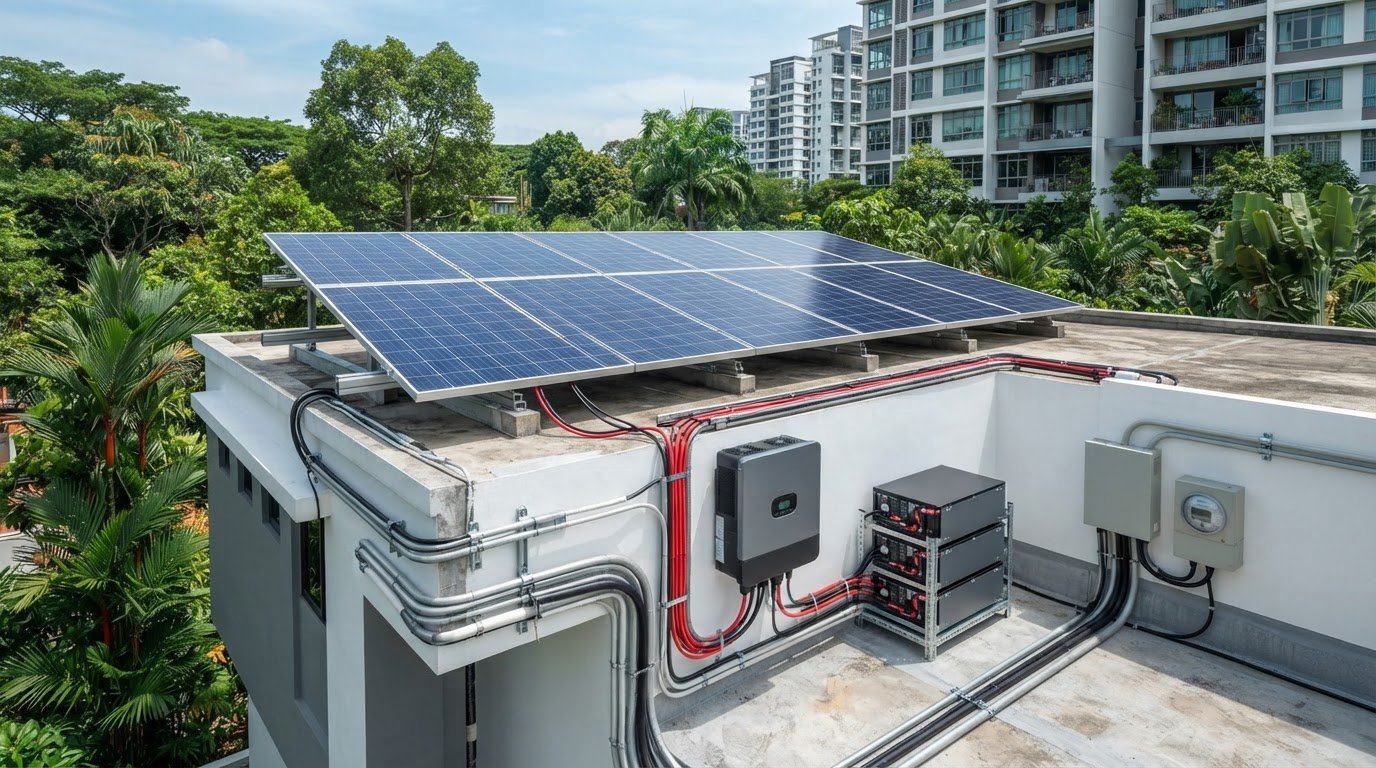
Could an inverter described as “high voltage” still be incompatible with a solar system? Yes. The term can refer to the PV array input, the battery-side DC connection, or the inverter’s AC output. These specifications describe different interfaces and aren’t interchangeable. For high voltage solar inverters, suitability depends on the system configuration, not the label alone.
Comparing inverter, battery, and grid-side specifications can be difficult because they describe different parts of the system. This FAQ explains what each voltage reference means, how system architecture affects component compatibility, and which manufacturer documents to review during planning. It covers PV string design, battery requirements, inverter limits, and AC connection details. For projects in Singapore, understanding how these parts connect supports coordinated selection of hybrid inverters and related solar hardware. SM Solar is a wholesale distributor of hybrid inverters and other solar components for technically specified projects.
Key Takeaways
- Trace the system diagram from PV strings through conversion stages to storage and AC output before comparing equipment.
- Evaluate high voltage solar inverters by their architecture and interface requirements, not by the voltage label alone.
- Review PV input limits and MPPT details separately from battery interface and AC output specifications.
- Use manufacturer data sheets and compatibility documentation to coordinate inverter selection with panels, batteries, charge controllers, and circuit protection.
What Does High Voltage Mean in a Solar Inverter System?
“High voltage” describes a voltage level in a particular part of a solar system, not a universal inverter category. A specification might refer to the PV array’s DC input, a battery connection, an internal DC link, or the AC output. These values describe separate electrical interfaces and shouldn’t be compared as if they were one rating.
For high voltage solar inverters, the practical question is: high voltage where? The label alone won’t establish whether an inverter matches the PV strings, storage equipment, or grid connection. Read each rating alongside the system diagram and the manufacturer’s documentation.
- PV input: DC supplied by the solar array.
- Battery side: DC connection for storage, where supported by the inverter architecture.
- Internal DC link: An internal conversion stage that may not be a user-accessible connection.
- AC output: The inverter’s output interface to loads or a grid connection.
Which voltage does a high voltage inverter specification describe?
Inverter documentation usually identifies PV limits with terms such as maximum DC input voltage, MPPT voltage range, and startup voltage. These relate to the array and its string configuration. Battery voltage specifications appear separately and apply only to the battery interface. Grid-side AC ratings describe another stage. Check the parameter name, units, and connection diagram together. A “high voltage” label alone doesn’t identify the relevant terminal.
An internal DC link is part of the inverter’s power-conversion design. Don’t treat it as an external PV or battery rating unless the manufacturer explicitly identifies it as a connection point.
How does a solar inverter relate to the PV array and grid?
PV modules generate DC electricity. The inverter converts that power into AC for compatible loads or, in a grid-tied system, for connection to the electrical supply. Depending on the design, it may also track the array’s maximum power point and manage other system interfaces. The overview of solar power inverters provides background on these functions and inverter classifications.
Conversion paths differ by architecture. A grid-tied string inverter, a hybrid inverter with a supported battery interface, and a system using separate conversion equipment may connect components differently. System diagrams and manufacturer documentation define intended connections, operating limits, and interface requirements. Use those documents to identify what each voltage specification refers to before assessing compatibility.
How High Voltage Solar Inverter Architectures Handle PV and Storage
System architecture determines how array power reaches the grid and whether storage connects directly to the inverter. PV strings feed designated DC inputs, control electronics track the array’s operating point, and conversion stages produce AC output. The internal arrangement varies by inverter type, so a high-voltage rating alone doesn’t describe the complete power path.
Compatibility depends on the match between the PV string design, inverter input and tracking limits, and any supported battery interface. Consider these as connected design decisions, then verify each interface against the selected manufacturer’s documentation.
How PV strings and MPPT inputs work together
Modules connected in series form a string, with each module contributing to the string’s DC voltage. Strings connect to the inverter’s designated PV inputs. Each maximum power point tracking (MPPT) input controls the operating point of its connected array section as conditions change. Multiple MPPT inputs can support separate array sections, but the permitted arrangement depends on the inverter design.
Use the selected inverter datasheet to check maximum DC input voltage, MPPT operating range, startup requirements, and allowable input current. Compare these limits with the proposed string design and the panel’s electrical documentation under applicable operating conditions. A string arrangement suitable for one inverter may not meet another inverter’s limits.
How hybrid inverter and battery configurations differ
A grid-tied PV inverter converts array power to AC for use in the connected electrical system. A hybrid inverter is designed to coordinate PV and battery power paths, but its functions and connections vary by model. Some system architectures use separate equipment for storage instead of connecting a battery directly to the PV inverter.
Battery-side limits are distinct from PV input limits. Check the inverter’s supported battery voltage range, charging and discharging requirements, communication interface, and approved configuration against the battery documentation. Lithium iron phosphate (LiFePO4) describes a battery chemistry, not an automatic compatibility guarantee. The U.S. Department of Energy explains how an inverter converts direct current (DC) electricity into AC for grid use; storage functions depend on the system architecture and equipment.
For technically specified projects, coordinating hybrid inverters, panels, batteries, and related hardware helps align component interfaces. Explore solar system hardware as part of that planning process.
High Voltage vs Other Solar Inverter Setups: What Actually Changes?
“High voltage” is only one part of an inverter comparison. Evaluate the PV input design, battery interface, conversion role, and grid connection separately. Two systems with similar voltage labels may have different connection arrangements and operating limits. Different architectures may also meet the same project requirement using different combinations of components.
Compare equipment documentation against the project’s required functions rather than assuming one architecture is universally more efficient or suitable. The U.S. Department of Energy’s overview of power electronic devices places inverters within the broader field of conversion and control equipment used in solar and grid applications.
| System feature | Documentation to inspect | Design implication |
|---|---|---|
| PV input | Inverter datasheet, PV input and MPPT limits, panel electrical data | Confirms whether the proposed string arrangement falls within the inverter’s specified operating limits. |
| Battery interface | Inverter battery specifications, battery documentation, system diagram | Establishes whether storage connects directly and which electrical and communication requirements apply. |
| Conversion role | Manufacturer system diagram and operating documentation | Shows whether the inverter converts PV power, manages supported storage functions, or works alongside separate equipment. |
| Grid connection | AC output specifications and applicable project documentation | Defines the inverter’s grid-side interface independently of its PV and battery connections. |
High voltage battery systems and lower voltage battery systems
Battery voltage describes the storage-side interface, not the PV string or AC output. A higher- or lower-voltage battery arrangement may require a different inverter input, conversion stage, or system configuration. Compare the battery’s stated operating specifications with the inverter’s supported range and connection requirements. Battery voltage alone doesn’t establish system performance or suitability; capacity, power limits, controls, and the wider design also matter.
Grid-tied and hybrid inverter configurations
A grid-tied inverter’s central function is converting PV power for use in a grid-connected system. A hybrid configuration adds storage-related functions only where the inverter design supports them. Grid interaction remains separate from PV input and battery operation, even when one unit manages these functions. Off-grid projects have different operating requirements, so assess them as a distinct use case and consult a dedicated off-grid hybrid inverter guide.
For high voltage solar inverters, a meaningful comparison is grounded in project requirements, system diagrams, and manufacturer limits. Match each interface independently before deciding whether the equipment fits the design.

How to Evaluate High Voltage Solar Inverter Specifications
Assess the inverter as part of a complete system, not as a standalone voltage label. For high voltage solar inverters, each interface has its own operating limits and documentation. Use this sequence to structure the review:
- Start with the system diagram. Trace connections from PV strings to inverter inputs, then identify any battery connection, AC output, isolation points, and protection devices. Confirm that the diagram matches the intended system configuration.
- Review PV input limits. In the inverter datasheet, locate maximum DC input voltage, MPPT operating range, startup requirements, and input current limits. Compare them with the proposed string arrangement and PV module documentation.
- Check MPPT configuration. Note the number of MPPT inputs and the manufacturer’s requirements for strings assigned to each input. Verify the planned arrangement against the inverter manual.
- Assess the battery interface, if used. Compare the inverter’s supported battery operating specifications and connection requirements with the battery manual. Don’t infer compatibility from battery chemistry or voltage alone.
- Review AC output and protection. Check the inverter’s AC output specifications, isolation provisions, and stated protection requirements. Confirm protection device selection and installation requirements against current product documentation, system design documents, and applicable project standards.
Checklist principle: match every system interface to its corresponding inverter limit, component specification, and installation requirement.
Which inverter datasheet specifications should readers compare?
Compare PV input and MPPT data with the array design, battery interface specifications with the selected battery where storage is part of the system, and AC output details with the grid-connected design. Read footnotes, wiring diagrams, and product manuals alongside summary tables. A headline rating can’t replace the operating conditions and connection limits specified by the manufacturer.
How should component compatibility be checked?
Use current manuals and system design documents as primary references. Check the PV module electrical data against inverter input limits, then evaluate any battery and protection components against their stated interface requirements. For circuit protection, review the related solar circuit protection guide alongside manufacturer documentation so device ratings and installation context are considered together.
SM Solar supplies hybrid inverters and related solar hardware for coordinated project planning. Explore solar inverter and protection hardware for your system requirements.
Planning a High Voltage Solar Inverter System with SM Solar
Start planning with project requirements, not an inverter label. Define the intended grid connection, PV array, storage role if required, and operating loads. Then use a system diagram to map each connection and identify the component documentation needed to assess compatibility. This keeps equipment selection tied to the actual architecture.
What information supports a technically specified inverter system?
Review the system diagram, load profile, and current component datasheets together. The diagram shows the proposed power path and connection points. The load profile frames the project’s operating requirements. Datasheets establish the manufacturer’s stated input, output, and interface limits for the inverter, panels, batteries, charge controllers, and protection devices.
Separate documented requirements from assumptions. Record whether storage is part of the design, which equipment connects directly to the inverter, and which functions rely on separate components. Mark unresolved details rather than treating them as confirmed specifications. This makes information gaps visible before they affect procurement or system integration.
Coordinated hardware selection reduces ambiguity at component interfaces. Match each inverter connection to the relevant panel, battery, controller, or protection documentation, then keep those references with the system design. Compatibility depends on the stated requirements of the complete equipment combination, not on a shared voltage description.
How does SM Solar fit into solar hardware planning?
SM Solar is a wholesale distributor of solar hardware and has operated since 2008. Its supplied categories include hybrid inverters, solar panels, batteries, charge controllers, and circuit protection devices. Compare related components against the project diagram and their manufacturer documentation to keep planning focused on the intended system architecture. No single component specification can replace a complete compatibility review.
SM Solar also provides system integration, installation, and after-sales maintenance for end users. These capabilities complement hardware supply in the broader planning process. The focus remains on matching defined project requirements with equipment documentation, rather than assuming that a particular inverter model or voltage specification applies to every design.
Use this documentation-led process to evaluate high voltage solar inverters and related components for a technically specified project. SM Solar supplies solar hardware categories relevant to system planning.
Plan Your Solar System Around Its Interfaces
“High voltage” only has meaning in context. PV input, battery connections, internal conversion stages, and AC output each have separate specifications. For high voltage solar inverters, sound planning starts by identifying those interfaces and matching each one to the system diagram, manufacturer data, and component documentation.
Compare PV limits and MPPT requirements with the array design. Assess any battery connection separately, then review AC output and protection requirements. No single voltage label establishes compatibility or makes one architecture right for every project.
SM Solar is a wholesale supplier of hybrid inverters and related solar hardware. A coordinated review of inverter, panel, battery, charge controller, and circuit protection requirements helps keep component selection aligned with the project.
Explore SM Solar’s solar hardware range to find equipment categories relevant to your system plan. With clear requirements and documentation in hand, you can make a more informed evaluation.
Frequently Asked Questions
What is a high voltage solar inverter?
A high voltage solar inverter is associated with a higher-voltage electrical interface in a solar system, but the term alone doesn’t identify which interface. It may refer to the PV array’s DC input, a battery connection, or another part of the architecture. Check the datasheet heading and system diagram to distinguish these ratings. The inverter’s PV, battery, and AC specifications describe separate connections and aren’t interchangeable.
Is a high voltage solar inverter the same as a high voltage battery inverter?
No. A high-voltage PV input rating describes the DC interface from the solar array, while a high-voltage battery rating describes the storage connection. An inverter may support one interface without supporting the other. Some hybrid designs handle both, but their operating limits and connection requirements remain separate. Compare the inverter and battery documentation to confirm that the specified battery interface is supported. Don’t infer compatibility from the words “high voltage.”
How does a high voltage solar inverter work?
A high voltage solar inverter receives DC power from PV strings and converts it into AC power for compatible loads or a grid connection. Its control system may track the array’s maximum power point to manage PV operation. Conversion stages and additional functions vary by architecture. A hybrid model may also manage a supported battery connection, while a grid-tied PV inverter may not have a direct battery interface.
Can a high voltage solar inverter work with any solar panel or battery?
No. Panel compatibility depends on the proposed string configuration and the inverter’s stated PV input voltage, MPPT range, and current limits. Battery compatibility depends on a supported battery interface and the manufacturer’s operating and connection requirements. A battery’s chemistry alone, for example, doesn’t establish that it can connect to a particular inverter. Compare current datasheets and system diagrams for every component before specifying the combination.
What should I check before specifying a high voltage solar inverter?
Start with the system diagram and project requirements. Check the inverter’s maximum PV input, MPPT configuration and operating range, and input current limits against the panel and string design. If storage is included, review the supported battery interface and requirements separately. Then assess AC output, isolation, and protection provisions using current manufacturer documents and applicable project standards. Confirm that each component connection is explicitly supported.
Are high voltage solar inverters suitable for off-grid systems?
They can be suitable if the inverter is designed for off-grid operation and its functions match the system requirements. A grid-tied inverter typically relies on a grid connection and may not provide standalone power during a grid outage. Off-grid systems require an architecture designed to supply loads independently, with compatible storage or other specified equipment where required. Check the manufacturer’s operating documentation and system diagram for the intended use.
What is the difference between a grid-tied and hybrid solar inverter?
A grid-tied inverter converts PV power for use in a grid-connected system. A hybrid inverter combines PV conversion with supported storage functions, which may include charging or discharging a connected battery. Exact capabilities depend on the model and system design. Grid interaction, PV input, and battery connections are distinct functions, even when one unit manages more than one. Review the datasheet and connection diagram to establish what the inverter supports.